
Table of Contents
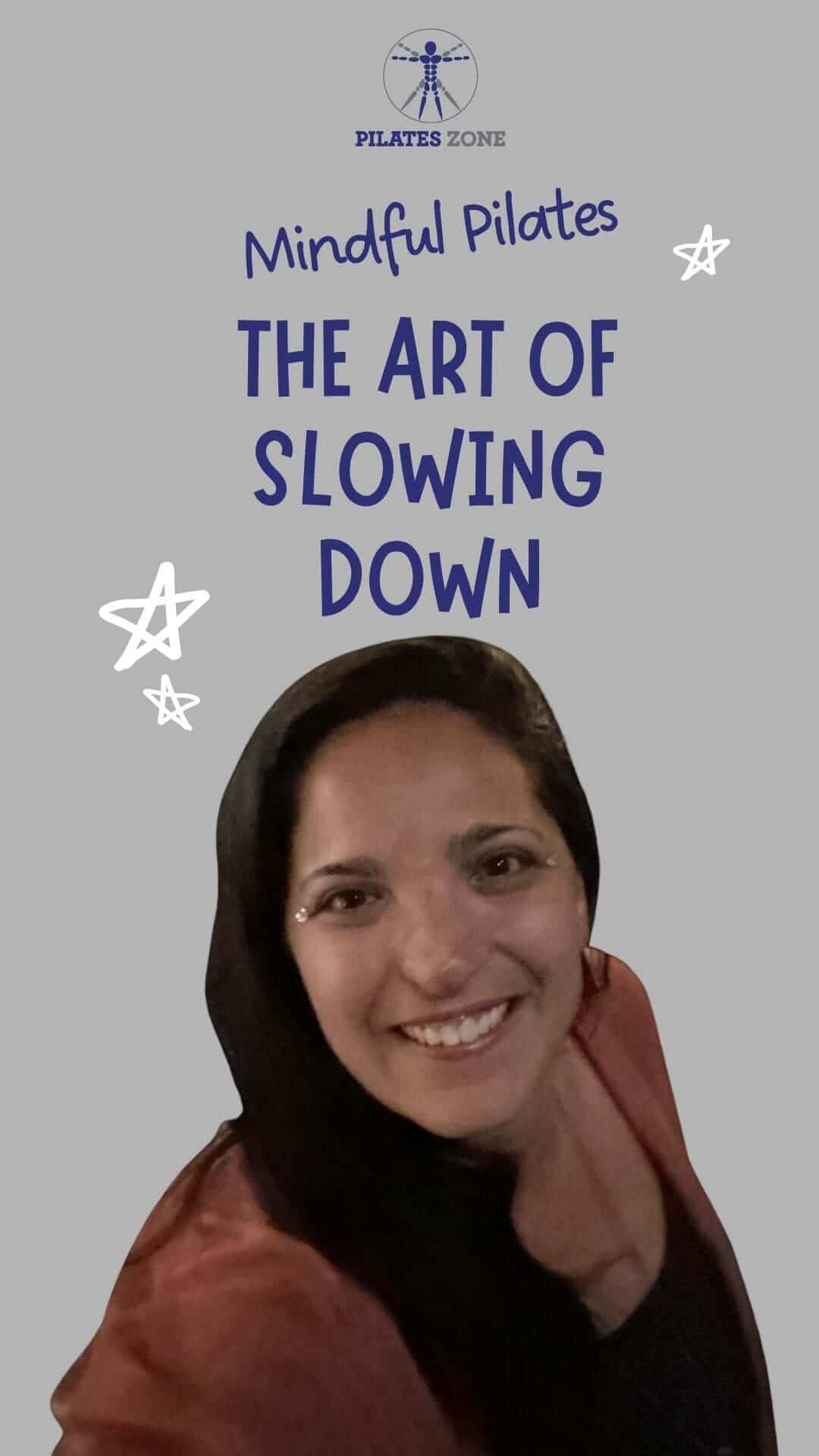
In classical Pilates, we learn the art of slowing down. Mindful Pilates is not about doing less. It is about paying attention to more.
Every movement has a purpose. We practice with precision, control, and intention—not to rush through the exercises, but to connect more deeply with our body and our mind.
In a world that constantly asks us to move faster, Pilates gives us another option: slow down, breathe, and pay attention.
Why Mindful Pilates Matters
When we move with awareness, we notice more.
We notice where we are holding tension. We notice when our body wants to compensate instead of truly doing the work. We notice our breath, our posture, our alignment, and the small details that can easily disappear when we move too quickly.
This is one of the things I love most about classical Pilates.
The goal isn't simply to complete an exercise.
The goal is to feel the exercise.
Mindful Pilates gives us the opportunity to become more present in our movement. Instead of simply going through the exercises, we learn to listen to what our body is telling us.
When we pay attention to what is happening in our body, we create an opportunity for real change not only in our Pilates practice, but in the way we move through everyday life.
When you slow down, you can notice:
Your breath — Are you holding your breath or allowing it to support the movement?
Your alignment — Are you moving from the right place, or compensating somewhere else?
Muscle engagement — Can you actually feel the muscles doing the work?
Tension — Where are you working harder than you need to?
Control — Can you stay connected to the movement from beginning to end?
Awareness — Are you truly present, or simply trying to finish the exercise?
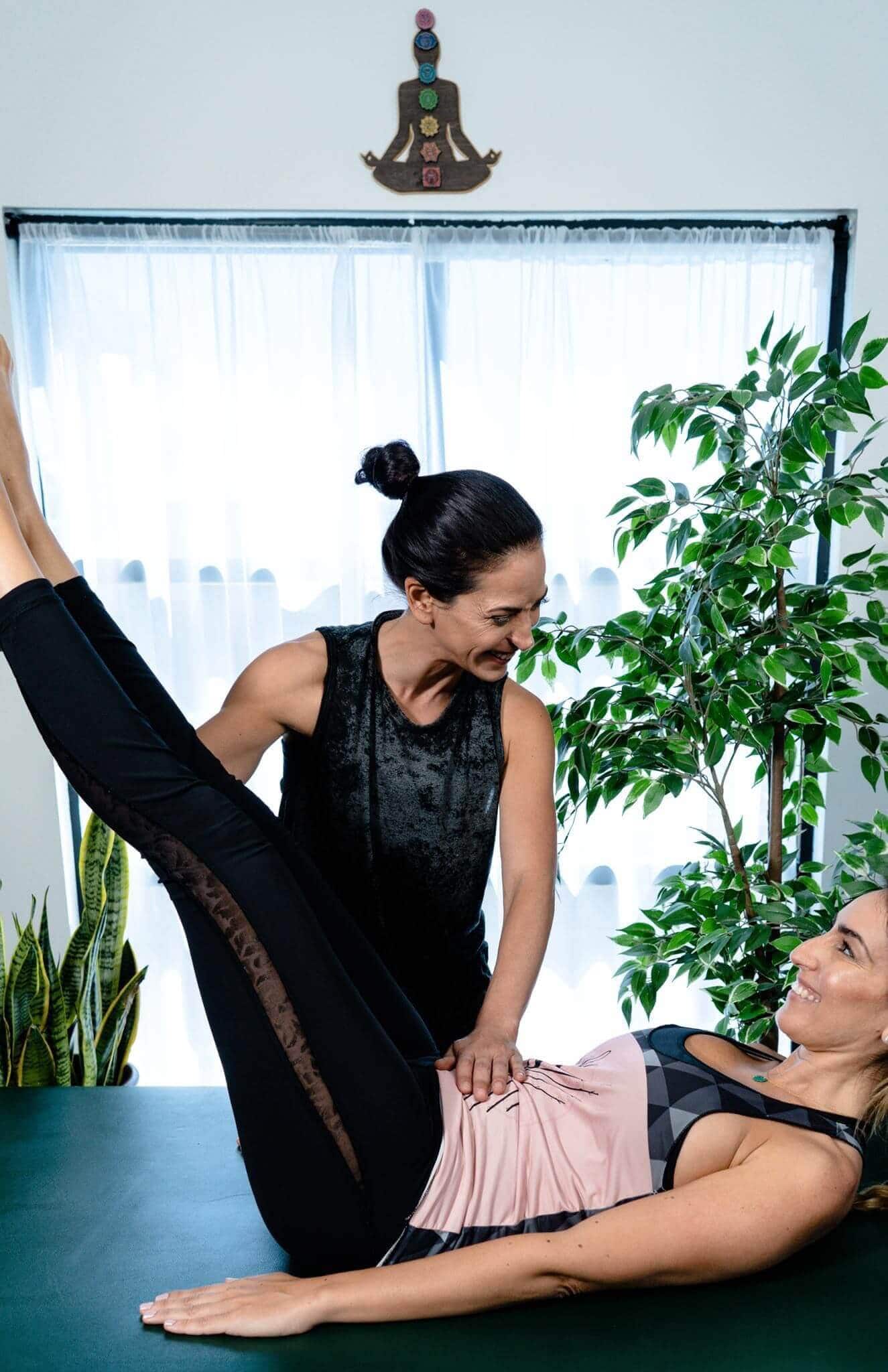 Mindful Pilates practice with Yoni Avni
Start With the Fundamentals
When we first learn Pilates, we move slowly because we are learning.
We are learning how to organize the body, how to connect our breath to movement, how to control each part of an exercise, and how to understand what we are actually doing.
The fundamentals matter.
They give us the foundation we need to move with confidence and control.
As we become more experienced and move into intermediate and advanced work, the tempo may change. Some exercises become faster and more dynamic.
But faster does not mean better.
Even in advanced Pilates, control, precision, and awareness remain at the center of the practice.
And this is something I remind myself and my students of often:
No matter how advanced you become, you can always return to the basics.
Sometimes going back to the fundamentals is exactly what we need.
Slow down.
Reconnect.
Feel.
Then move forward again.
What Pilates Can Teach Us About Life
Our Pilates practice doesn't exist in a bubble.
We take what we learn on the mat and carry it with us into the rest of our lives.
And daily life can be very different from a Pilates studio.
There is always another email to answer. Another appointment. Another responsibility. Another thing we feel we need to accomplish.
We become so used to being busy that slowing down can almost feel uncomfortable.
But what if slowing down isn't falling behind?
What if it is actually a way of taking better care of ourselves?
Mindful movement teaches us to pause and notice what is happening before automatically moving on to the next thing.
Sometimes we need to create space between one commitment and the next.
Sometimes we need to leave our schedule a little lighter.
Sometimes we need to say no.
And sometimes the most important thing we can do is simply stop for a moment, take a breath, and notice how we feel.
Every time we say “no” to something that doesn't truly serve us, we may be creating space to say “yes” to ourselves.
Less Can Be More
This is one of the lessons Pilates continues to teach me.
We don't always need more.
More exercises.
More intensity.
More hours in the gym.
More things on our schedule.
Sometimes we need less—but with more awareness.
One well-controlled movement can teach us more than ten rushed repetitions.
A few quiet minutes can change the way we feel for the rest of the day.
And mindful movement can help us reconnect with something we often lose when life becomes too busy: our own body.
Try Mindful Pilates Today
You don't need an hour of Pilates to practice mindfulness.
Take five minutes.
Choose one simple movement and do it slowly.
Notice your breath.
Notice where you feel the movement.
Notice where you are holding unnecessary tension.
Don't worry about how many repetitions you complete.
Instead, ask yourself:
Can I feel more?
Can I move with more control?
Can I be present for this moment instead of thinking about what comes next?
That is the practice.
Not only moving slowly, but learning to be where you are.
Mindful Pilates: Come Back to Yourself
Classical Pilates has taught me that the body doesn't always need us to push harder.
Sometimes it needs us to listen.
Sometimes it needs us to slow down.
And sometimes, returning to the fundamentals is the most advanced thing we can do.
Mindful Pilates is about creating that connection between the body and the mind—being present enough to notice, control, and understand your movement.
So today, give yourself permission to take your time.
Move with control.
Breathe.
Pay attention.
And remember:
Less is more. Slower can be stronger. And moving with intention can change the way we feel—not only in our practice, but in our lives.
🧘♀️ Want to take this idea into your Pilates practice?
I created a class focused on one of the fundamental skills of Pilates: pelvis stability.
When we slow down and take the time to understand the basics, we build a stronger foundation for everything that comes next.
In this class, we’ll focus on understanding how to stabilize and control the pelvis, so you can move with greater awareness, precision, and confidence.
Slow down. Understand the fundamentals. Build your foundation. Then move forward.
🎥 Click here to watch the class and practice with me.
Is mindful Pilates good for beginners?
Yes. Mindful movement can be especially helpful for beginners because it gives you time to understand the fundamentals and develop control before increasing the pace or difficulty of an exercise.
Does mindful Pilates have to be slow?
Not necessarily. Mindful Pilates is about awareness, not simply speed. Some exercises may be slow and controlled, while others may be more dynamic. The important thing is staying connected to your breath, body, and movement.
Why is awareness important in Pilates?
Awareness helps you understand how your body is moving. It allows you to notice alignment, tension, breathing, muscle engagement, and areas where you may be compensating. This can make your practice more intentional and meaningful.
Can mindful Pilates help outside of class?
Yes. The awareness you develop through Pilates can carry into everyday life. Learning to pause, breathe, listen to your body, and move with intention can change the way you approach daily activities as well.
What are the principles of mindful Pilates?
Mindful Pilates centers around awareness, breath, control, precision, concentration, and intentional movement. These principles help you stay connected to your body rather than simply moving through a series of exercises.
FAQs
What is mindful Pilates?
Mindful Pilates combines the principles of classical Pilates with greater awareness and presence. Instead of simply completing the exercises, you pay attention to your breath, alignment, muscle engagement, control, and how your body feels throughout each movement.
Is mindful Pilates good for beginners?
Yes. Mindful movement can be especially helpful for beginners because it gives you time to understand the fundamentals and develop control before increasing the pace or difficulty of an exercise.
Does mindful Pilates have to be slow?
Not necessarily. Mindful Pilates is about awareness, not simply speed. Some exercises may be slow and controlled, while others may be more dynamic. The important thing is staying connected to your breath, body, and movement.
Why is awareness important in Pilates?
Awareness helps you understand how your body is moving. It allows you to notice alignment, tension, breathing, muscle engagement, and areas where you may be compensating. This can make your practice more intentional and meaningful.
Can mindful Pilates help outside of class?
Yes. The awareness you develop through Pilates can carry into everyday life. Learning to pause, breathe, listen to your body, and move with intention can also change how you approach daily activities.